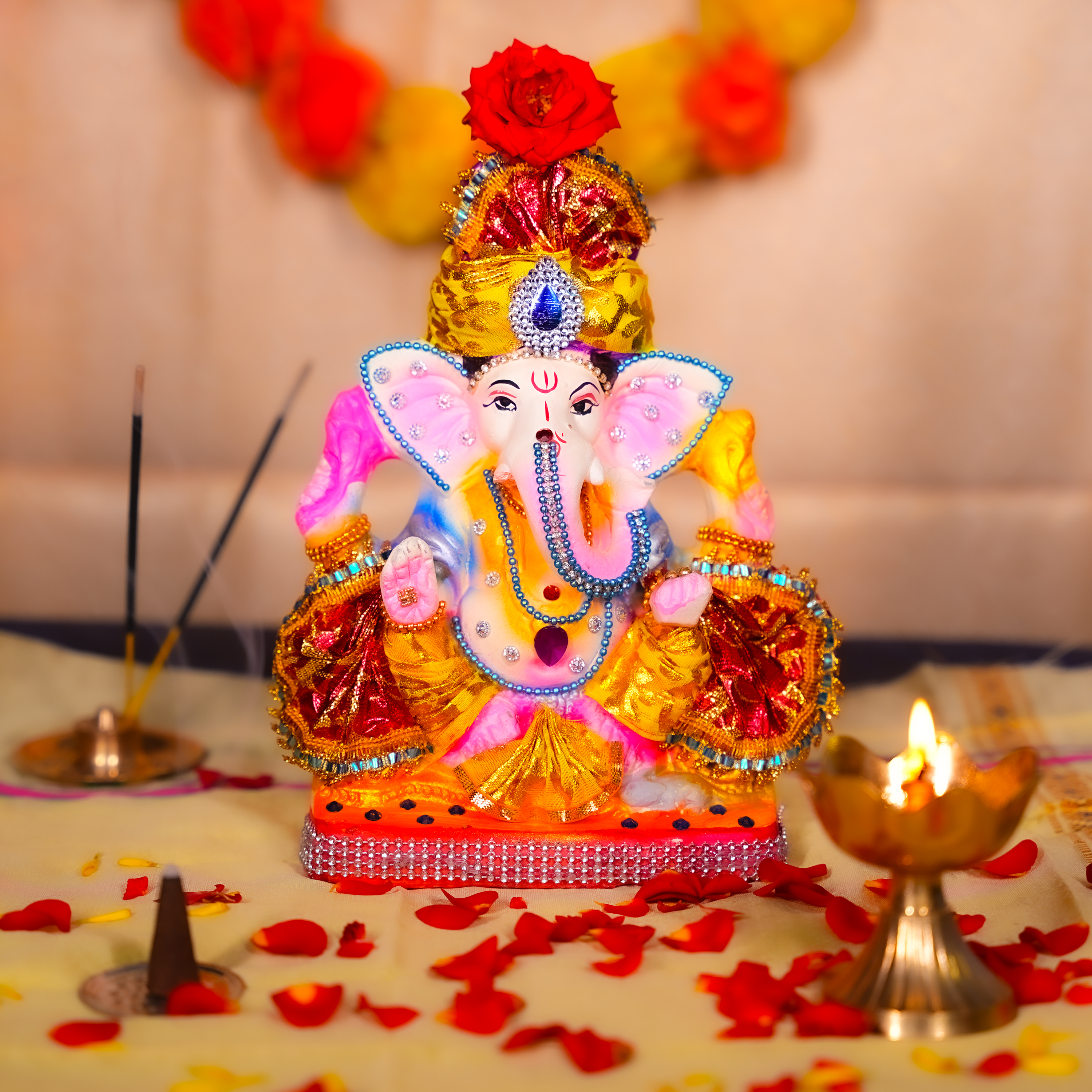
CLAY GANESHA COLOUR DECORATED
CLAY GANESHA COLOUR DECORATED
₹300.00
In the realm of art and spirituality, the clay Ganesha—adorned in vibrant colors—stands as a symbol of creativity and auspicious beginnings. Ganesha, the beloved elephant-headed deity of wisdom and intellect in Hindu mythology, is often sculpted from clay, offering a unique canvas for artistic expression. The process of decorating a clay Ganesha not only involves molding the figure but also infusing it with colors that embody tradition, joy, and festival spirit. ### Crafting the Clay Ganesha The journey begins with the preparation of the clay, often sourced from riverbeds or local artisans. This natural clay embodies earthiness and connects the sculptor to their roots. As the clay is kneaded and shaped, it transforms into the familiar form of Ganesha—his large ears and gentle smile reflecting the warmth and wisdom he represents. Each curve and contour is molded with care, as artists pour their heart into the creation, making each Ganesha unique. ### The Importance of Color Color plays a pivotal role in the decoration of clay Ganesha. Traditionally, vibrant hues are chosen to represent various aspects of the deity's nature. For instance, red signifies love and passion, while yellow represents knowledge and learning. The use of gold paint can symbolize purity and divinity, creating a luminous appeal. Artists often draw inspiration from nature, celebrating the vibrant colors found in flowers, fruits, and the environment. These choices not only enhance the aesthetic but also deepen the spiritual significance of the idol. ### Techniques of Decoration Decorating a clay Ganesha involves several techniques, each adding layers of meaning and magnificence. 1. **Hand-Painting**: Using brushes, artists meticulously paint intricate designs on the surface of the clay. Floral patterns, geometric shapes, and traditional motifs are commonly seen, each telling a story of devotion and celebration. This method allows for fine detail and personalization, making each piece a unique masterpiece. 2. **Mosaic Application**: Some artists opt for a mosaic style, embedding tiny pieces of colored glass or stone into the clay. This technique creates a dazzling effect, as light dances off the surfaces, catching the eye and enchanting onlookers. 3. **Natural Dyes**: Eco-conscious decorators often choose to use natural dyes made from fruits, vegetables, and minerals. This practice not only enhances the idol’s beauty but also aligns with sustainability, reflecting a respect for the earth. 4. **Glitter and Sequins**: To bring an element of celebration, many artisans embellish the Ganesha with glitter or sequins. These sparkly additions catch the light beautifully, making the idol shine during festivals or ceremonies. ### Significance in Festivals The decorated clay Ganesha is particularly prominent during the festival of Ganesh Chaturthi, a time when thousands of families bring home these idols to worship and celebrate. As the festival approaches, the streets come alive with stalls displaying these colorful creations, drawing in devotees and tourists alike. People often choose Ganesha idols based on the colors and decorations that resonate with them, reflecting personal faith, aspirations, and hopes for the upcoming year. ### Eco-Friendly Trends With rising awareness about environmental issues, many artists are now focusing on creating clay Ganesha idols that are both beautiful and biodegradable. The use of non-toxic colors and sustainable materials ensures that, once the festival concludes, these idols can be immersed in water without harming aquatic life. This movement represents a harmonious blend of tradition with modern eco-consciousness, embodying respect for both culture and nature. ### Conclusion The art of creating a colored, decorated clay Ganesha is not merely a task but a labor of love, steeped in tradition and spirituality. Each piece serves as a reminder of faith, creativity, and the joy of new beginnings. As the vibrant colors come to life, they carry the message of Ganesha—overcoming obstacles and nurturing wisdom, exemplifying the very essence of artistic devotion. In celebrating this tradition, we honor both the heritage of our ancestors and the creativity of the present, ensuring that the god of wisdom continues to inspire generations to come.